

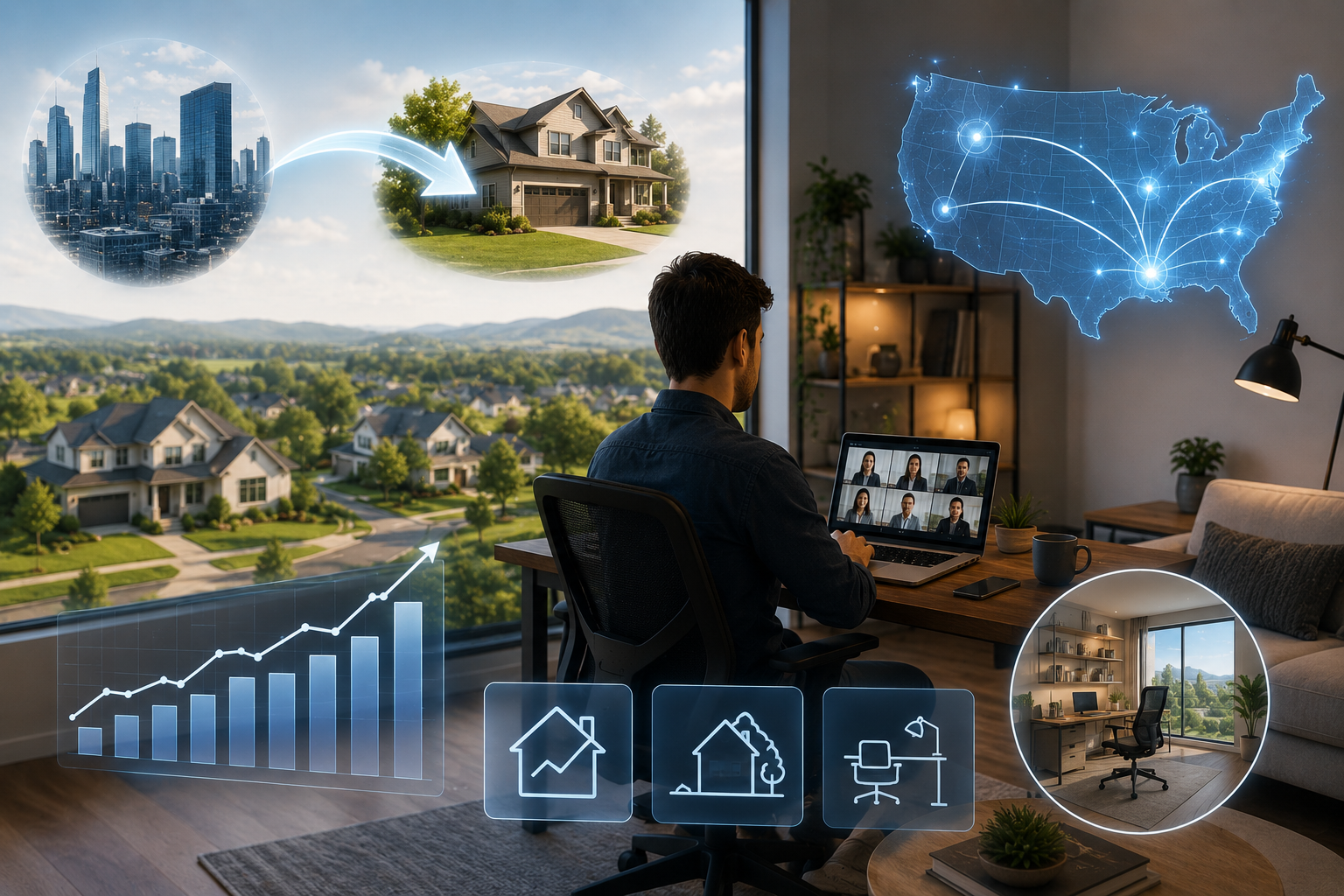
The impact of remote work on where — and how — we choose to live.
Proximity to the office used to decide everything. Now homebuyers are choosing space, lifestyle, and flexibility first — and Bangalore's real estate market is reshaping itself around that shift.
The way people live and work has undergone a remarkable transformation over the last few years. Remote work, once considered a temporary solution, has become a permanent part of many organizations worldwide — and it has significantly influenced real estate, changing homebuyer preferences, investment patterns, and property demand across major cities, including Bangalore.
As professionals embrace flexible and hybrid work models, the demand for homes, locations, and amenities has evolved. Understanding these changes matters for homebuyers, investors, developers, and real estate professionals adapting to the future of the property market.
01Increased demand for home offices
One of the most noticeable effects of remote work is the growing demand for dedicated home office spaces. Properties with dedicated workspaces have become more attractive — particularly among IT professionals, entrepreneurs, freelancers, and remote workers.
As a result, developers are designing homes that accommodate both living and working requirements under one roof.
02Changing location preferences
Remote work has reduced the importance of daily commuting for many professionals — encouraging buyers to consider locations that offer more than just proximity to the office.
Was the priority
Distance to office
Now the priority
Space, affordability & lifestyle
In Bangalore, areas beyond the traditional city center are seeing increased interest from homebuyers seeking spacious properties and a balanced lifestyle. Suburban and emerging residential locations continue to gain popularity as infrastructure and connectivity improve.
03Growth of suburban real estate markets
The demand for larger homes at competitive prices has accelerated growth in suburban markets, with families increasingly preferring homes that provide extra space for work, education, and recreation.
04The rise of location independence
One of the most transformative outcomes of remote work is location independence. Professionals are increasingly choosing where they live based on lifestyle preferences, family needs, cost of living, educational opportunities, environmental quality, and connectivity — moving beyond traditional employment hubs while maintaining productive careers.
As a result, cities with strong infrastructure and high quality of life continue attracting both remote workers and investors.
05How remote work is reshaping commercial real estate
The impact of remote work extends well beyond residential housing.
Reduced demand for traditional office space
Hybrid work models are reducing the need for large office footprints, pushing companies toward flexible layouts, shared workspaces, co-working facilities, smaller corporate offices, and satellite offices closer to residential areas.
Growth of co-working spaces
Flexible work environments are growing in popularity among startups, freelancers, and hybrid workers — offering professional environments, networking opportunities, flexible memberships, and lower operational costs.
Smart office design
Businesses are investing in technology-enabled workplaces that support collaboration and employee well-being.
Smart meeting rooms
Built for hybrid collaboration between in-office and remote teams.
Hybrid collaboration tools
Technology that bridges in-person and remote participation seamlessly.
Sustainable office spaces
Energy-conscious design choices built into newer commercial developments.
Wellness-focused design
Layouts that prioritize employee well-being alongside productivity.
Flexible seating arrangements
Spaces that adapt to fluctuating in-office attendance.
06Emerging trends driven by remote work
Increased demand for larger homes
Homebuyers now prioritize functionality alongside comfort — additional rooms that double as offices, study areas, or multipurpose spaces are increasingly valued.
Focus on lifestyle amenities
Developments offering clubhouses, walking trails, fitness centers, green spaces, and community workspaces are attracting greater buyer interest.
Higher demand for smart homes
Remote workers rely heavily on technology, driving demand for smart security systems, home automation, energy-efficient features, and high-speed internet infrastructure.
Investment in Tier-2 and emerging cities
Many professionals are exploring growing cities where housing is more affordable while still offering quality infrastructure and digital connectivity.
07Remote work and Bangalore real estate
Bangalore remains one of India's most important employment and technology hubs. Even so, remote work has changed how people choose properties within and around the city.
What buyers weigh now
Popular residential destinations continue to evolve as infrastructure projects improve connectivity across Bangalore.
08Expert insight
"The rise of remote and hybrid work models has permanently changed how people evaluate real estate. Buyers are no longer looking only at location; they are also considering lifestyle, flexibility, workspace requirements, and future growth potential. At 100 Yards, we help clients identify properties that align with these changing needs while maximizing long-term value and investment potential."
09The future of remote work and real estate
Remote work is expected to remain a significant influence on the real estate sector for years to come.
Developers, investors, and buyers who adapt to these changes will be better positioned to benefit from emerging opportunities.
Finding homes built for how you actually live now
Modern homebuyers need more than just a property — they need a home that supports their lifestyle and career goals.